
Why Choose Australia? The Working Holiday Destination That Actually Changes You
With dozens of countries offering working holiday visas, why do so many backpackers choose Australia — and why do so many find it impossible to leave? An honest, sweeping look at what Australia offers that nowhere else quite does.
Why Choose Australia? The Working Holiday Destination That Actually Changes You
Picture a life where your biggest decision on a Friday afternoon is whether to have a BBQ at the river or head to someone's property to watch the sunset from the back of a ute. Where your paycheck is real enough to make plans with. Where the person standing next to you on a farm at 6am could be from Japan, Ireland, Brazil, or Taiwan — and by 10am, you're already swapping stories like old friends.
This is not a travel brochure fantasy. For an enormous number of people who've gone to Australia on a Working Holiday Visa, it is the daily texture of life.
But let's be honest about the question this article is actually answering: Why Australia, specifically?
After all, you can get working holiday visas for New Zealand, Canada, Germany, Japan, South Korea, and dozens of other countries. You have options. So why does Australia, year after year, remain the first choice — and often the only choice — for backpackers who are serious about both earning money and experiencing something genuinely life-altering?
This article is the honest case for Australia. Not the brochure version — the version that explains why people who came for twelve months end up applying for year two, and then year three, and then can't quite explain to people back home what happened.
The answer isn't one thing. It's the collision of several things that exist almost nowhere else simultaneously.
The Scale of the Thing
The first thing you need to understand about Australia is that you cannot meaningfully grasp it until you've stood inside it.
The numbers try to communicate: Australia is the world's sixth largest country by land area, occupying nearly 7.7 million square kilometers. It shares a continent with no other nation. Its interior — the ancient, arid red-rock heartland that Australians call the Outback — is so vast that the entire population of Taiwan (23 million people) would represent a density of roughly three people per square kilometer if scattered across the country.
But numbers don't land emotionally.
What lands is the moment you drive west from Brisbane and the suburban sprawl genuinely disappears. What lands is the first time you park your car on a dirt road at night with no light pollution for 200 kilometers in any direction, and you see the Milky Way the way it was meant to be seen — not as a faint smear across the sky, but as a solid, luminous arch from horizon to horizon. What lands is waking up in a regional town and realizing the streets are quiet not because the place is dead, but because there are simply not very many people, and those people aren't in a rush.
This scale isn't just aesthetic. It has practical consequences for you.
The cities that feel overwhelmingly dense and competitive in other countries — the places where opportunity seems scarce and the competition is suffocating — simply don't dominate Australia the way their equivalents dominate most countries. There is a working ecosystem outside the major cities, a genuinely operational rural and regional economy that needs labor, pays well for it, and offers a kind of breathing room that most urban professionals have quietly given up on ever experiencing.
That space is available to you, with the right visa, the right tools, and the right awareness of how to access it.
The Money Is Real
The thing that distinguishes Australia from most working holiday destinations is blunt: you can actually build something financially while you're there.
This isn't the case everywhere. Working holidays in some countries pay enough to sustain travel but rarely generate savings. Australia is different.
From the 2025–2026 financial year, Australia's national minimum wage is AUD $24.95 per hour — and most casual workers (which most WHV holders are) receive an additional 25% casual loading, putting the effective floor at around AUD $31 per hour. In specific industries and with overtime, that number compounds significantly.
The agricultural sector — the entry point for most first-year backpackers — offers piece-rate picking work that rewards efficiency. A skilled blueberry picker at a major farm operation can clear AUD $1,000–1,200 per week in peak season. That's not a ceiling — it's the middle of the distribution.
Move into regional industrial work — specifically the three industries that have become something of an open secret among experienced backpackers — and the numbers shift again:
Cotton ginning and warehousing (typically May through November) is 12-hour shifts, six days a week, with overtime and loading rates that can push weekly take-home past AUD $2,000–2,500. The physical work is manageable once you're acclimatized. The money is not modest.
Grain handling operations (November through February) follows a similar pattern. Site operators, forklift drivers, and logistics crew in grain facilities work intensive seasonal schedules in regional Queensland, New South Wales, and South Australia. The pay structure is similar.
Winery work (January through May) covers the harvest, which is increasingly mechanized but still requires substantial human labor for sorting, processing, barrel management, and logistics. Wineries in South Australia, Western Australia, and Victoria operate at scale, particularly in regions like the Barossa Valley, Margaret River, and the Hunter Valley.
Chain these three seasons across a 12-month period and you have, in principle, year-round highly paid work in regional Australia. People who successfully navigate this circuit routinely report earning AUD $80,000–100,000+ in a single year — while living in lower-cost regional areas and spending comparatively little.
This is not normal for a working holiday. This is why Australia is not a normal working holiday.
The Culture That Surprises You

Most people go to Australia expecting the wildlife, the beaches, and the accent. What they don't expect is the culture — specifically, how fundamentally different the social contract feels compared to where most of our readers are coming from.
Australian workplace culture — particularly in the regional, blue-collar environments where most backpackers operate — runs on a set of values that can feel almost disorienting if you've spent years working in environments driven by hierarchy, face-saving, and performative effort.
Work is work, and life is life. On a well-run Australian worksite, the expectation is simple: show up, do the job properly, and go home when the shift ends. There's no expectation of performing dedication beyond the actual task. You're not asked to stay late to demonstrate loyalty. You're not evaluated on your visible enthusiasm. You're evaluated on whether the job is done well.
This sounds mundane unless you've spent time in a workplace where the opposite is true — where leaving on time is a political act, where your value is measured in performed effort rather than actual output, where the social hierarchy requires constant navigation just to do your daily work.
Directness is kindness. Australians, particularly working-class Australians in regional areas, say what they mean. If they're happy with your work, they'll tell you. If something is wrong, they'll tell you that too — usually immediately, usually without drama, and usually without expecting the conversation to have lasting social consequences. This pattern of directness can feel blunt at first. It isn't unkind. It is, in many ways, a form of respect: the assumption that you can handle honest information and don't need it wrapped in layers of diplomatic ambiguity.
The joke is the social glue. Australian humor is dry, self-deprecating, and often at the expense of absolutely everyone including the person telling the joke. You will be ribbed — especially as a foreigner — and the ribs are almost always affectionate. The worst social crime in many Australian workplaces isn't incompetence; it's taking yourself too seriously. Learn to laugh at yourself early and you'll have more friends by the end of the week than you'd make in months elsewhere.
The People You Meet
One of the least talked-about reasons Australia changes people is the social environment of the backpacking experience itself.
When you work in agriculture or industrial settings in regional Australia, you are surrounded by people from an extraordinary range of countries and backgrounds — all, by definition, people who decided to try something beyond the conventional. You meet Taiwanese people working their way through the cotton circuit, Irish people on their gap year after university, South Koreans on educational leave, Brazilian travelers who came for three months and stayed for three years.
The density of this international cross-section in regional Australia creates something unusual: a social environment where nobody's default social script quite applies, which means everyone has to be actually present.
There aren't many social environments in adult life where you routinely sit around a fire with people from six different countries eating food someone's mum taught them to make, telling stories that couldn't exist without the specific context you're all in together. Australia's working holiday circuit is one of them.
These friendships also tend to last. When you've slept in the same hostel, started the same job, and driven the same dusty road with someone, the friendship skips the shallow-end phase. The depth of connection that backpacker communities form — particularly in regional areas where entertainment options are limited and human interaction is the primary social resource — is something many people describe as one of the most valuable things they brought home.
The Physical Environment
Let's talk about the landscape, because it would be dishonest to write about why people choose Australia and not address the fact that the country is, in visual terms, genuinely unlike anything most people have seen.
Australia has several distinct physical environments, each extraordinary in its own way.
The tropical north — Queensland's far north, the Northern Territory — is rainforest, reef, and raw heat. The Great Barrier Reef. Daintree National Park. Waterfalls you can swim under in wet season. Towns where the "pub" is a historic building older than most countries' governments. Cairns as a base for marine exploration. The actual, functional tropics, not a theme park version.
The red centre — Uluru and the surrounding desert country of the Northern Territory — is something that resists description. A sandstone monolith 348 meters high and 9.4 kilometers in circumference, sitting in a vast flat desert, changing color across a day as the light moves across it from rose-pink at sunrise to deep ochre at midday to something almost luminous at sunset. Sacred to the Anangu people for thousands of years and deeply, physically arresting to almost everyone who stands in front of it. The desert itself isn't empty — it's populated with desert oaks, thorny devils, euros, dingoes, and a sky at night that is one of the best in the world.
The southeast coast — Sydney, the Blue Mountains, the south coast of New South Wales down through Victoria — combines urban infrastructure with extraordinary natural proximity. The coastal national parks within two hours of Sydney contain beaches you will have largely to yourself on weekday mornings. The Blue Mountains are a genuinely vast wilderness an hour and a half from the country's largest city.
The southwest — Western Australia's Margaret River wine region, the Ningaloo Reef, and the Kimberley — is increasingly recognized internationally as world-class, but remains significantly less crowded than the east coast despite its quality. Margaret River offers world-class surfing and boutique wineries within the same twenty-kilometer stretch.
For someone arriving on a 12-month visa with the intention of both working and traveling, Australia offers more distinct geographic and ecological experiences per unit of territory than almost any comparable destination. You can, within a single year, see tropical rainforest, coral reef, red desert, temperate wine country, and snow-capped mountains — all without leaving the country.
The Safety Net That Actually Works

Australia is a wealthy country with functioning public institutions. For a backpacker, this matters in ways that become apparent slowly.
Healthcare: If you're a citizen of the UK, Ireland, Belgium, Sweden, Norway, Finland, Italy, the Netherlands, or a handful of other countries that have reciprocal healthcare agreements with Australia, you're entitled to access Australian Medicare for necessary medical treatment. For others, travel insurance is essential — but the hospitals and emergency services you might need to use are world-class.
Labor rights: Australia's Fair Work Act applies to all workers regardless of visa status. If you're being underpaid, denied leave entitlements, or working in unsafe conditions, you have legal recourse through the Fair Work Ombudsman. There are people who try to exploit backpackers — particularly through informal arrangements or unregistered labor — but the legal framework protecting you is genuine and genuinely enforced.
Banking and financial infrastructure: Getting set up financially in Australia is straightforward. Major banks (CommBank, Westpac, NAB, ANZ) have simple processes for opening accounts without extensive Australian credit history. Direct wage deposits are standard. Superannuation (pension contributions) are made on your behalf by employers and can be withdrawn as a Departing Australia Superannuation Payment when you leave.
Communication and connectivity: Australia's mobile coverage is significantly more extensive than the country's physical size might suggest. The major regional towns have reliable 4G coverage. Even in genuinely remote agricultural areas, satellite internet has improved dramatically in recent years.
The Honest Part
Australia isn't perfect, and the Working Holiday experience isn't a permanent solution to everything.
The regional agricultural work can be isolated and physically taxing. The seasonal nature of the work means uncertainty is built in. Some employers — particularly those operating through informal or less-reputable agency structures — have historically exploited backpackers. Housing in popular backpacker areas can be overpriced and overcrowded.
The cost of living in the major cities is high by global standards. Sydney and Melbourne rank consistently among the most expensive cities in the world. The casual labor market has its volatility.
And Australia is far. Depending on where you're coming from, a flight costs real money, takes real time, and puts real distance between you and home. That distance can be liberating, and it can also be heavy.
None of these things are reasons not to go. But they're reasons to go with realistic expectations and a real plan — which, if you've read this far, you're already building.
The Intangible Shift
There's something almost impossible to put into a listicle, but it comes up in almost every honest conversation with people who've done the Australian Working Holiday experience and returned.
Something shifts.
It's not that they came back with a better resume, though often they did. It's not just the money they saved, though that helped open doors. It's something more fundamental — a reconfiguration of what they thought their life could look like.
People who spend a year or more in Australia working the visa properly tend to come back with a recalibrated understanding of what they're capable of. They dealt with vehicle breakdowns in the middle of nowhere and solved them. They arrived in a town where they knew nobody and built a social life. They adapted to physical work they'd never imagined themselves doing. They navigated bureaucracy in a foreign country, managed finances in a foreign currency, established themselves in a foreign labor market — and they did all of this while, most of the time, having a genuinely good time.
This isn't a unique observation. Ask anyone who's done it. The common thread is almost always some version of: I didn't know I could do that.
Australia, perhaps more than any other working holiday destination, creates the conditions for that realization. The country is safe enough that you don't spend your energy on basic security. The wages are high enough that you're not perpetually stressed about money. The social culture is open enough that you can build a real community. And the landscape is extraordinary enough that even rest feels rewarding.
So: Why Australia?
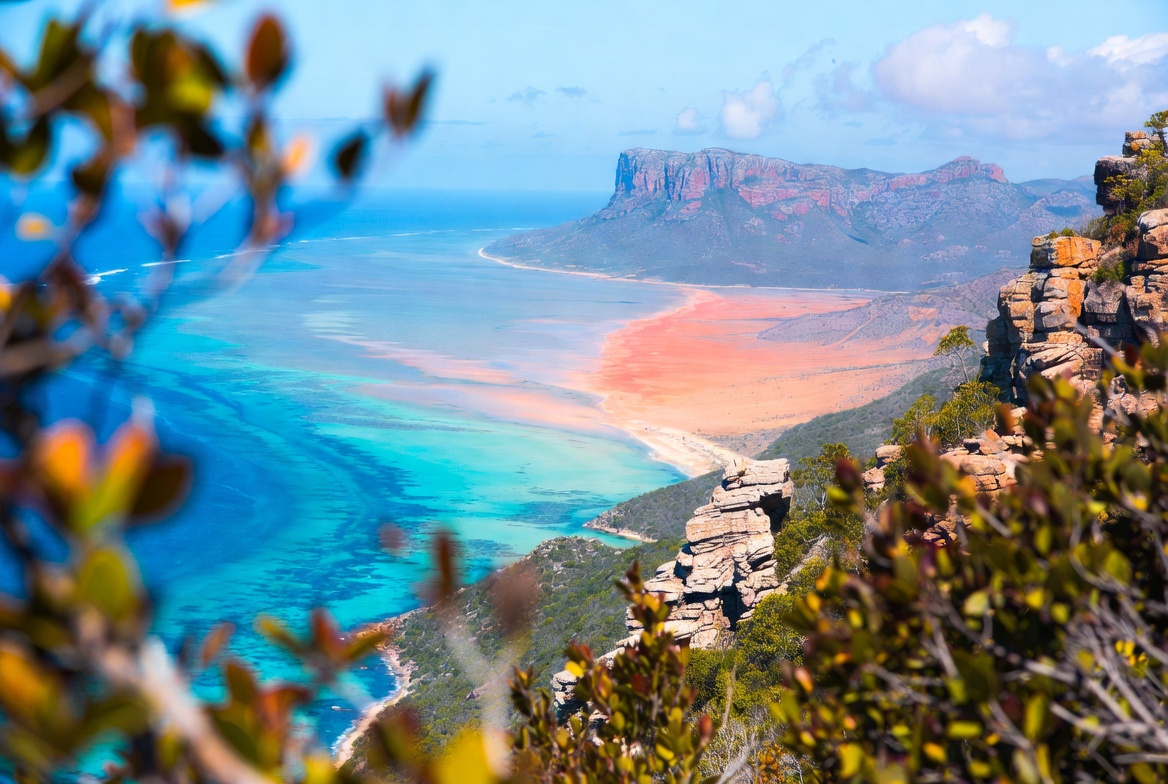
Because it is the rare intersection: serious money, genuine freedom, extraordinary landscape, a functional and fair society, and a social culture that makes the experience of living it genuinely enjoyable.
Because you can arrive at twenty-two with a suitcase and a visa and leave at twenty-four with savings, skills, friendships scattered across a dozen countries, and a more expansive understanding of what your life can contain.
Because the country is physically incomparable in size and variety, culturally unpretentious in a way that rewards people who'd rather be real than performative, and large enough that there's always a next place to go when one place has given you everything it has.
Because one year in Australia — done well, with intention — has the capacity to change the way you see yourself.
That's why people come. That's why so many of them stay longer than planned. And that's why, years later, when you ask them about it, their eyes do something specific that's difficult to describe in writing but that you'll recognize immediately when you see it — the look of someone remembering a version of their life they were proud to have lived.
The question was: why choose Australia?
Maybe the better question is: why would you choose anything else first?
What Comes Next
Understanding why Australia is the right destination is one thing. Knowing what to do once you're there is another.
The backpackers who leave Australia having genuinely changed their financial position didn't just show up and get lucky. They made specific decisions: where to live, which jobs to target, how to sequence the year. Those decisions are what separate a good working holiday from an extraordinary one.
If you're ready to go beyond the overview, our Pro&Plus guides cover exactly that — the high-wage job categories, the regional housing strategies, and the income roadmap built for people who want more than a break.
Continue with: High-Wage Jobs Guide: How to Reach $2,000+ Weekly →
This article was last updated February 2026. Wage figures and statistics reflect publicly available 2025–2026 data at the time of writing. Earnings, costs, and working conditions vary by location, employer, season, and individual circumstances. This article is for general informational purposes only and does not constitute financial or immigration advice.
Next Step
See How the Guide System Works
Compare the free guides, the member playbooks, and the map before choosing how deep to go.
Open-AU routes
Turn this guide into a map route
Australia job entry pages
Australia working holiday jobs: compare 88 days fit, map clusters, pay, accommodation, guides, location analysis, and Australian English practice in one Open-AU route.
Open routeHospitality in Queensland
Hospitality jobs in Queensland: compare 88 days fit, map clusters, pay, accommodation, guides, location analysis, and Australian English practice in one Open-AU route.
Open routeFruit Picking in Queensland
Fruit Picking jobs in Queensland: compare 88 days fit, map clusters, pay, accommodation, guides, location analysis, and Australian English practice in one Open-AU route.
Open routeMining in Western Australia
Mining jobs in Western Australia: compare 88 days fit, map clusters, pay, accommodation, guides, location analysis, and Australian English practice in one Open-AU route.
Open routeSnow Season in Victoria
Snow Season jobs in Victoria: compare 88 days fit, map clusters, pay, accommodation, guides, location analysis, and Australian English practice in one Open-AU route.
Open routeRanch in Northern Territory
Ranch jobs in Northern Territory: compare 88 days fit, map clusters, pay, accommodation, guides, location analysis, and Australian English practice in one Open-AU route.
Open routeRead Next
Working Holiday Visa FAQ: Everything You Need to Know (2026 Complete Guide)
Every question you've ever had about Australia's Working Holiday Visa — answered honestly, without the sugarcoating. From eligibility to the second-year extension, this is the guide that actually prepares you.
Open articleCity or Countryside: The Question That Defines Your Entire Working Holiday
City or regional Australia? This one decision shapes your income, friendships, and entire working holiday. Here's how to choose — and what most guides won't tell you.
Open article