
Working Holiday Visa FAQ: Everything You Need to Know (2026 Complete Guide)
Every question you've ever had about Australia's Working Holiday Visa — answered honestly, without the sugarcoating. From eligibility to the second-year extension, this is the guide that actually prepares you.
Working Holiday Visa FAQ: Everything You Need to Know (2026 Complete Guide)
There's a question that pops into thousands of young minds every single year, usually somewhere between a dead-end job and a Sunday afternoon with too much time to think:
"What if I just… went to Australia?"
The thought is intoxicating. Sun. Space. The kind of wild, open country that feels like it shouldn't exist in the modern world. And somewhere out there — the promise of real money, real freedom, and a version of your life you can't quite access from where you're sitting right now.
But then comes the second thought, the one that deflates the first: Do I even qualify? Is this thing actually real? How does a Working Holiday Visa actually work?
That's exactly what we're going to break down — completely, honestly, and without the fluffy marketing speak that most visa guides drown in. By the end of this article, you'll know whether Australia is an option for you, what it takes to get there, how long you can stay, and what your first year (and beyond) actually looks like.
Here's what most guides won't tell you upfront: the difference between someone who leaves Australia with $10,000 and someone who leaves with $80,000 is almost never the visa. It's the decisions made after landing. Those decisions start here.
First, A Reality Check: What Is a Working Holiday Visa?
A Working Holiday Visa (WHV) is one of the most unique travel documents in the world. It is not a tourist visa — you can't work on one of those. It's not a work visa — you're not tied to a single employer. It's a hybrid: a visa that gives you the right to work and travel inside Australia at the same time, for up to 12 months per grant.
Australia manages two types:
- Subclass 417 (Working Holiday Visa) — primarily for passport holders from countries that have long-standing bilateral agreements with Australia
- Subclass 462 (Work and Holiday Visa) — for a broader set of countries, with some additional requirements depending on nationality
Both let you work, explore, and live like a functioning human being instead of a tourist with an expiry date. Both can potentially be extended beyond the initial 12 months.
Here's what makes this visa genuinely special: Australia has one of the highest minimum wages in the world. As of the 2025–2026 financial year, the national minimum wage sits at AUD $24.95 per hour (approximately AUD $948 for a standard 38-hour week). Casual workers — which most backpackers are — receive an additional 25% loading, pushing that base to roughly AUD $31.19 per hour. Compare that to almost anywhere else on the planet and you'll understand why so many people don't just visit Australia — they fund their lives here.
Now, let's answer the questions you actually have.
Part 1: Eligibility — Can You Even Get This Visa?
Q: How old do I need to be?
The standard age window for both subclasses 417 and 462 is 18 to 30 years old, inclusive, at the time of application. That means if you're turning 31 the day after you apply, you're still eligible.
However, there are notable exceptions:
- Canada, Denmark, France, Ireland, and UK passport holders on Subclass 417: You can apply up to 35 years old (inclusive). UK citizens gained this right from July 1, 2023; Denmark from July 1, 2022; Canada, France, and Ireland have held this expanded age limit since November 2018.
- Denmark, France, Ireland, Italy, and UK citizens on Subclass 462: Also eligible up to 35.
If you're in your late twenties wondering if you've missed the window — you probably haven't. But don't wait much longer to find out.
Q: Which countries are eligible for Subclass 417?
Subclass 417 is available to passport holders from these countries:
Belgium, Canada, Republic of Cyprus, Denmark, Estonia, Finland, France, Germany, Hong Kong SAR (including British National Overseas passport holders), Republic of Ireland, Italy, Japan, Republic of Korea, Malta, Netherlands, Norway, Sweden, Taiwan, and the United Kingdom.
Taiwan is on this list — a fact that surprises many Taiwanese who assumed they might be excluded from international programs. You're not. The process is the same.
Q: Which countries are eligible for Subclass 462?
Subclass 462 covers a wider (and growing) list: Argentina, Austria, Brazil, Chile, China, Czech Republic, Ecuador, Greece, Hungary, India (added September 2024), Indonesia, Israel, Luxembourg, Malaysia, Mongolia, Papua New Guinea, Peru, Philippines (from July 2024), Poland, Portugal, San Marino, Singapore, Slovak Republic, Slovenia, Spain, Switzerland, Thailand, Turkey, Uruguay, United States of America, and Vietnam.
Important note for China, India, and Vietnam applicants: These three countries now require participation in a ballot process before you can even apply. Spaces are capped — China at 5,000 places, Vietnam at 1,500, India at 1,000 per program year. The ballot for the 2025-2026 cycle ran in mid-2025. If your country operates on a ballot, plan well ahead.
Q: Are there other requirements besides nationality and age?
Yes. Regardless of subclass, you generally need to:
- Be outside Australia at the time of application
- Have approximately AUD $5,000 in accessible funds to demonstrate you can support yourself initially
- Hold a valid passport from an eligible country
- Have no dependent children travelling with you
- Meet health and character requirements (a medical examination may be required; criminal background checks are standard)
For Subclass 462, some countries have additional requirements such as:
- A post-secondary education qualification (or minimum two years of post-secondary study)
- Functional English proficiency (not IELTS-level, but demonstrably conversational)
- A letter of support from your home government (this varies by nationality — check the Australian Department of Home Affairs website for your specific country)
Q: I have a previous criminal record. Am I automatically rejected?
Not necessarily — but it depends on the nature and severity of the offense. Minor offenses don't always disqualify applicants, but certain convictions (especially those resulting in imprisonment of 12 months or more) can lead to refusal. Be honest on your application. Attempting to hide a record and being caught creates a far worse outcome than disclosing it upfront.
Part 2: The Application Process — How Do You Actually Get It?
Q: How do I apply?
The application is entirely online through Australia's ImmiAccount portal on the Department of Home Affairs website. There is no embassy appointment, no physical paperwork to courier anywhere.
The steps are:
- Create an ImmiAccount
- Lodge your Subclass 417 or 462 application
- Pay the visa application charge (currently AUD $670 as of the 2025–2026 financial year — always verify on the Department of Home Affairs website as fees are reviewed annually)
- Complete any required health examinations if prompted
- Await the outcome
For most nationalities, the process is remarkably fast. Many applicants receive their visa grant within days or hours of applying, particularly for Subclass 417 from straightforward nationalities. Some cases take longer if additional checks are needed.
Q: Can I apply from any country?
You must be outside Australia when you apply. You can be in your home country or traveling anywhere else — but not inside Australia. Once granted, you can enter Australia for the first time at any point within 12 months of the grant date.
Q: When does the 12 months start?
The 12 months begins from your first entry into Australia, not from the date of the visa grant. This is a crucial distinction that many people muddle. If your visa is granted in January and you don't fly in until March, you still have a full 12 months from when you land.
✅ Application Preparation Checklist
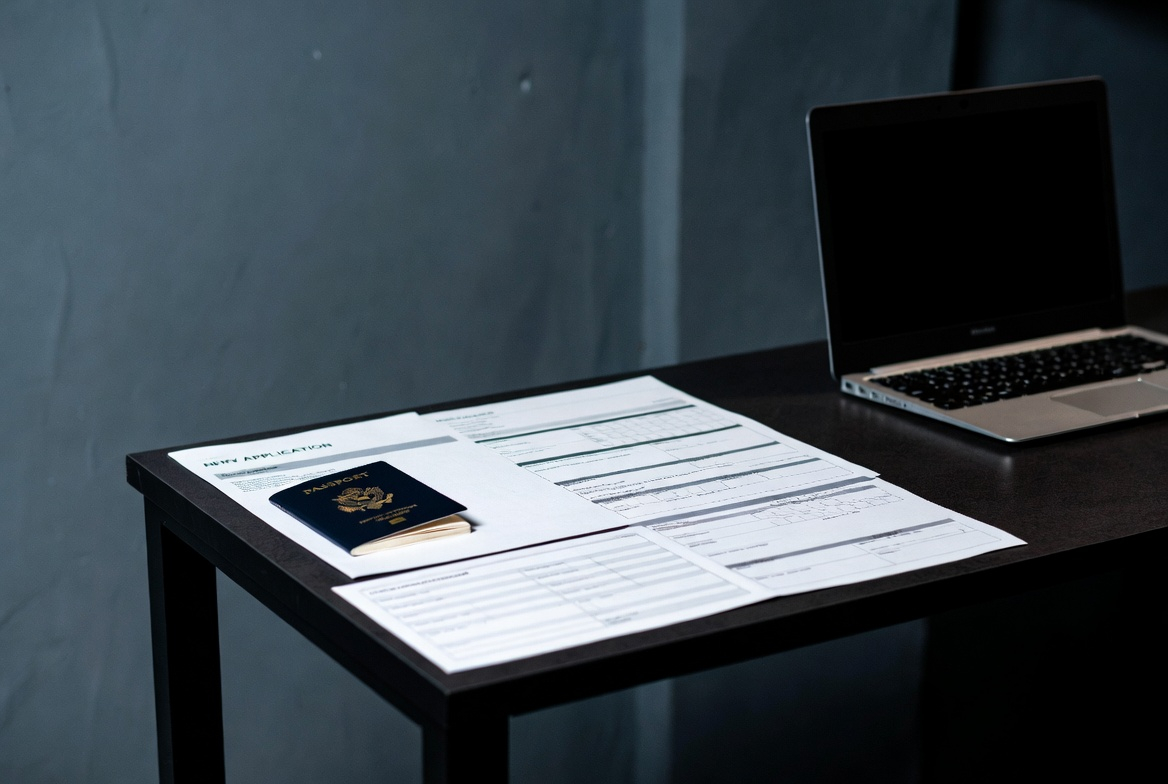
Before you apply, work through this list:
- Confirm your passport country is eligible for Subclass 417 or 462
- Confirm you are under the age limit (30, or 35 for select nationalities)
- Verify you have no dependent children accompanying you
- Confirm you have at least AUD $5,000 accessible in your bank account
- Check if your country requires a ballot before applying (China, India, Vietnam)
- Check if your nationality requires a letter of support or education proof (Subclass 462)
- Create an ImmiAccount at homeaffairs.gov.au
- Have your passport scanned and ready to upload
- Budget AUD $670 for the visa application charge
- Check if a health examination is required for your nationality
After arrival:
- Apply for a Tax File Number (TFN) at ato.gov.au — needed before you start work
- Open an Australian bank account (CommBank, Westpac, NAB, or ANZ)
- Register for Medicare if your home country has a reciprocal agreement with Australia
Part 3: The Second and Third Year — What's the Extension Story?
This is where Australia's WHV program gets genuinely extraordinary compared to every other country with similar programs. You can extend your stay, not just once — but twice.
Q: What do I need to do to get a Second Working Holiday Visa?
To qualify for a second 12-month visa, you need to have completed three months (88 days) of specified work in regional Australia while on your first visa.
Specified work includes:
- Agricultural work (fruit picking, harvesting, plant cultivation)
- Fishing and pearling
- Mining
- Construction
- Bushfire recovery
- Plant propagation nursery work
- Certain hospitality and tourism roles in specific regional areas
The emphasis here is on regional Australia — not the major cities. Sydney, Melbourne, Brisbane don't count. You need to be in designated regional postcodes. The Australian government's Regional Australia map and the relevant legislation define exactly which areas qualify.
Q: And a Third Year?
For a third year, you need to have completed six months (179 days) of specified work in regional Australia while on your second visa.
UK citizens are a special case as of July 1, 2024: UK passport holders can now be granted up to three separate Working Holiday visas without having to meet any specified work requirements. This is part of the expanded Australia-UK bilateral arrangements.
Q: Have the regional work areas changed recently?
Yes — and this is good news. As of April 5, 2025, the Australian government expanded the list of eligible regional areas for specified work. The expansion specifically includes areas across all states and territories that have been impacted by natural disasters such as bushfires, floods, cyclones, and severe storms. This change applies to applications lodged on or after April 5, 2025, as well as applications that were submitted but not yet decided at that date. If you're doing regional work in a disaster-affected area, check the Department of Home Affairs website to confirm your postcode is now eligible.
Q: Is the regional work brutal?
Honest answer: it depends. The reference point from people who've done it ranges from genuinely rewarding (finding a farming community that becomes like a second family) to deeply frustrating (isolated locations, seasonal uncertainty, physically exhausting conditions).
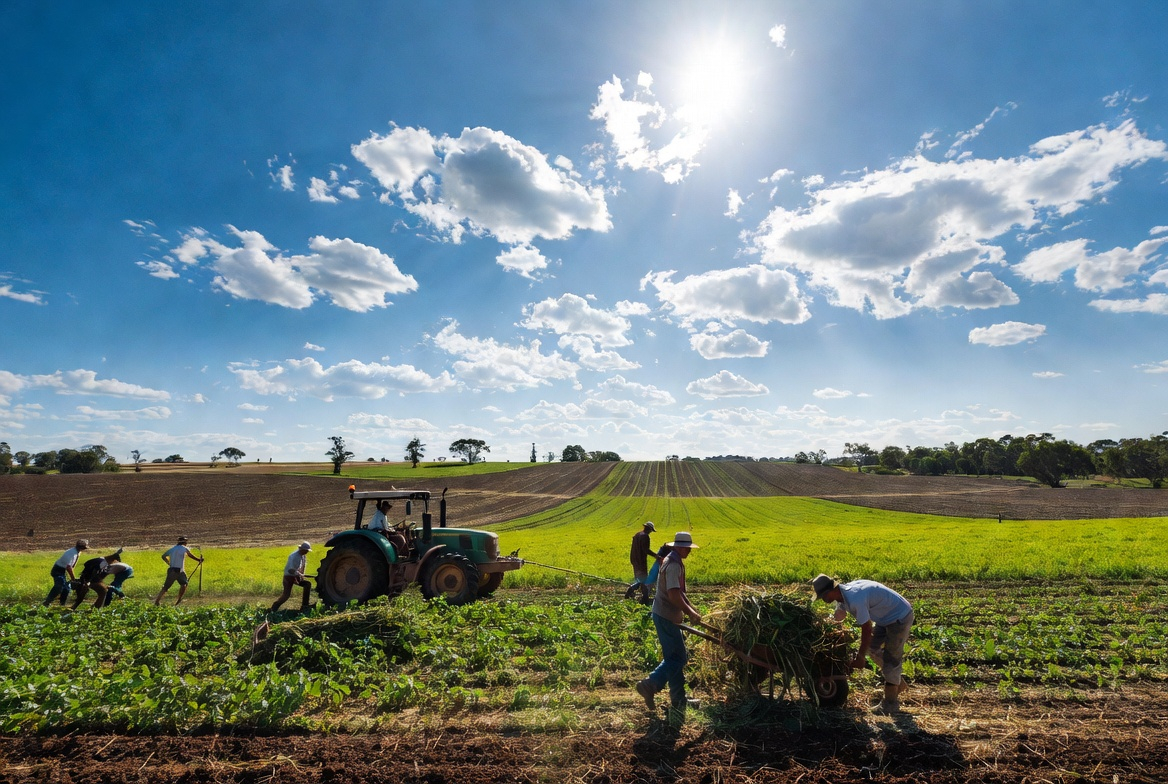
Fruit picking — blueberries, tomatoes, strawberries — is often the entry point. It can pay decently on a piece-rate basis if you're efficient. But the opportunity cost matters too: the regional work requirement exists precisely because Australia's agricultural sector relies on seasonal labor, and the WHV system helps fill that gap. Going in with the right expectation (this is a means to an end, and the end is another year in Australia) transforms the experience.
Part 4: Money, Tax, and the Reality of Life on a WHV
Q: Can I actually save money in Australia?
Yes — but it depends entirely on where you work and how much you spend. The cities are expensive. Renting in Sydney or Melbourne can easily consume AUD $300+ per week for a room in a shared house. Add food, transport, and the inevitable social life and the numbers disappear fast.
Go regional, live simply, take the industry work — and the math changes dramatically. Workers in agricultural and industrial settings in regional Australia routinely earn between AUD $1,200 and $2,500+ per week, especially in peak season with overtime. The cost of living in those areas is also significantly lower than the cities.
The three high-earning industries that backpackers consistently graduate into are cotton ginning and warehousing (May–November), grain handling (November–February), and winery work (January–May). Stack these back-to-back across a year and the numbers compound rapidly. AUD $100,000+ in a single year is achievable — not for everyone, but it's genuinely within the realm of real people's real results.
Q: Do I pay Australian tax?
Yes. As a working holiday maker, a specific tax rate applies. For most WHV holders, a flat tax rate of 15% applies to every dollar you earn up to AUD $45,000. Above that threshold, income between AUD $45,001 and $135,000 is taxed at 30% (AUD $6,750 plus 30 cents per dollar over $45,000), and income above $135,000 is taxed at higher marginal rates. Unlike Australian residents, working holiday makers do not receive the tax-free threshold — tax is applied from your very first dollar. You must have a Tax File Number (TFN), which you apply for after arriving in Australia through the ATO (Australian Taxation Office) website.
You'll also file an annual tax return for any Australian income year you worked in. This matters — many backpackers are owed a refund and simply don't claim it. Legitimate work-related deductions (tools, safety equipment, work-specific clothing, vehicle expenses if you use your car for work purposes) can significantly reduce your taxable income and increase your refund. Don't skip this step.
Q: Can I have multiple jobs?
Yes. You're not restricted to a single employer. You can work for different employers simultaneously or consecutively. The one traditional restriction was that you couldn't work for the same employer for more than six months — but verify the current regulations when you apply, as these have evolved.
Part 5: On the Ground — Life, Logistics, and What No One Tells You
Q: Do I need a car?
In regional Australia: almost certainly yes. Major farming areas, cotton gins, grain depots — these are not places with reliable public transport. A car is your lifeline, your freedom, and in many cases, a prerequisite for landing the better-paying jobs in the first place.
The most universally recommended brand among working holiday makers is Toyota. The logic is practical: Toyota spare parts are widely available across the country including remote areas. Other brands might be cheaper to buy but can leave you stranded waiting weeks for parts to be shipped.
Budget at least AUD $5,000–10,000 for a reliable second-hand 4WD or station wagon if you're planning to go regional. Consider it infrastructure, not a luxury.
Q: What's the social dynamic like?
Australia has a reputation among backpackers for being genuinely warm. That reputation, in most circumstances, holds up. Local Australians — particularly in regional areas — are notably direct, unpretentious, and generally unbothered by your nationality, accent, or background.
The social world of a backpacker in Australia can look remarkably like a local life: BBQs on weekends, shooting ranges or clay pigeon shoots with workmates, exploring national parks, picking up sports. The cultural barrier is mostly linguistic at first (Australian slang is genuinely its own dialect), but dissolves quickly once you're embedded in a work community.
A useful phrase guide for immediate survival:
- "How you going?" — This is "hello," not a question requiring a detailed update on your wellbeing
- "Right-o" — "Okay," but more casually Aussie
- "Flat out" — Very busy
- "Reckon" — Think/believe ("I reckon we'll knock off at three")
- "Arvo" — Afternoon
- "Servo" — Service station / gas station
- "Cheers" — Thanks, bye, anything positive
Q: Is it safe?
Australia's crime rate is low compared to most countries. The more commonly encountered risks are environmental: the sun (genuinely dangerous — UV levels are extreme; wear SPF 50), certain wildlife in specific areas, extreme heat in summer, and flash flooding in tropical regions during wet season. All of these are manageable with awareness.
For work safety specifically: Australia has strong workplace health and safety (WHS) legislation. Employers are legally required to provide safe working conditions, appropriate equipment, and injury reporting processes. If you're injured at work, you have rights under Australian workers' compensation law regardless of your visa status.
Part 6: The Questions You're Embarrassed to Ask

Q: What if my English isn't great?
You'll manage. Australia is a country built on waves of immigration from around the world, and the working environments most accessible to backpackers — agriculture, food processing, construction support — are full of people from dozens of countries navigating the same language gap. You don't need to be fluent on day one.
That said, building your English matters enormously for your earning potential. The higher-paying industrial jobs — forklift operating, gin production supervision, grain operations — require enough English to follow safety briefings, communicate with supervisors, and understand operational instructions. Focus on functional, workplace English rather than achieving perfect grammar.
Q: Can my partner do this with me?
Yes, if your partner also qualifies for a WHV independently. There is no couple or family visa within the WHV framework — you both apply separately, which means you both need to be from an eligible country and meet the age and other requirements. Many couples successfully navigate the WHV experience together; being a pair also has practical advantages (two-person shares are far easier to find in regional areas than single rooms).
Q: What happens if the visa gets rejected?
If your Subclass 417 application is refused, you'll typically receive a reason. Many refusals come down to deficiencies in documentation — insufficient proof of funds, incomplete health requirements, or character issues that weren't properly disclosed. Some refusals can be appealed through the Administrative Appeals Tribunal. Others cannot. Seek advice from a registered migration agent if you receive a refusal and believe it was made in error.
Q: Is there anything that should truly stop me from considering the WHV?
If you have serious, ongoing medical conditions that require specialist care and cannot be managed in a regional setting, that's worth considering carefully. If you have legitimate legal commitments in your home country that prevent extended absence, obviously that matters.
But if your hesitation is primarily about uncertainty, fear of the unknown, or not being sure if you're "the type of person who does this" — none of that is a real barrier. The Australian Working Holiday Visa system exists precisely because normal people, from every kind of background, can make this work. And often, transformatively so.
The Bigger Picture
Here's the truth that doesn't fit neatly into a FAQ format:
The Working Holiday Visa isn't just a document. It's a window — finite, specific, and genuinely rare. There are very few countries on Earth where a young person from an average background can arrive with a suitcase and a visa, get to work, and within a year or two have genuinely changed the trajectory of their financial and personal life.
Australia is one of them.
The bureaucratic questions — which subclass, what age, what documents — matter, and we've covered them. But the more important question is what you do once you land. The visa gives you access. What you choose to do with that access is everything.
Most people who spend time in Australia working the visa properly come back changed. Not because Australia is perfect — it isn't — but because they proved something to themselves in a place big enough and free enough to let them try.
That's the thing about a country where the population density is 3.2 people per square kilometer. There's room here. Room to breathe, to fail, to get back up, to try a different way.
The FAQ is answered. The harder question is: when are you going?
Ready to Go Beyond the Overview?
This guide covered the framework — the visa types, eligibility rules, and what the WHV system actually is. That's the foundation.
But knowing the rules is different from knowing how to use them. The difference between someone who leaves Australia with $10,000 saved and someone who leaves with $80,000 isn't the visa — it's the decisions they made once they landed. Where they chose to live, which jobs they targeted, and how they structured their year.
Our Pro&Plus guides go deeper: specific accommodation strategies, the high-wage job categories with the numbers that matter, and a step-by-step income roadmap you can actually follow.
Start with: Accommodation Guide: How to Stop Overpaying for a Bed and Start Building a Base →
This article was last updated February 2026. Visa fees, minimum wage figures, tax rates, and eligibility rules are subject to change — always verify current requirements at homeaffairs.gov.au and ato.gov.au. WHV tax rates shown reflect 2025–2026 ATO schedules; the 15% rate applies only when your employer is registered with the ATO as a Working Holiday Maker employer. This article is for general informational purposes only and does not constitute legal, financial, or immigration advice.
Next Step
Open the 88 Day Job Map
Move from visa theory into actual regional job locations, seasons, and eligibility signals.
Open-AU routes
Turn this guide into a map route
Australia job entry pages
Australia working holiday jobs: compare 88 days fit, map clusters, pay, accommodation, guides, location analysis, and Australian English practice in one Open-AU route.
Open routeFruit Picking
Fruit Picking jobs in Australia: compare 88 days fit, map clusters, pay, accommodation, guides, location analysis, and Australian English practice in one Open-AU route.
Open routeProduce
Produce jobs in Australia: compare 88 days fit, map clusters, pay, accommodation, guides, location analysis, and Australian English practice in one Open-AU route.
Open routeHospitality
Hospitality jobs in Australia: compare 88 days fit, map clusters, pay, accommodation, guides, location analysis, and Australian English practice in one Open-AU route.
Open routeMeat Processing
Meat Processing jobs in Australia: compare 88 days fit, map clusters, pay, accommodation, guides, location analysis, and Australian English practice in one Open-AU route.
Open routeRanch
Ranch jobs in Australia: compare 88 days fit, map clusters, pay, accommodation, guides, location analysis, and Australian English practice in one Open-AU route.
Open routeRead Next
Farm Work Deep Dive: Picking, Packing & Pay (2026)
Inside guide to Australian farm and agricultural work—how piece-rate vs hourly pay really works, how to read picking conditions, what regional work counts toward your second visa, and which farms are worth your time.
Open articleCity or Countryside: The Question That Defines Your Entire Working Holiday
City or regional Australia? This one decision shapes your income, friendships, and entire working holiday. Here's how to choose — and what most guides won't tell you.
Open article